

Common Faults and Analysis of Hydrogen Compressors
Abstract:
Hydrogen compressors play a crucial role in processes such as petroleum refining and methanol synthesis gas transportation in coal chemical industries. If a hydrogen compressor malfunctions, it can lead to plant shutdowns or even gas leaks, fires, and explosions, causing significant economic losses. This paper focuses on piston compressors used for transporting hydrogen gas, providing a detailed analysis of common operational issues and offering corresponding maintenance recommendations. These insights aim to assist safety managers and equipment operators in chemical enterprises.
In large-scale chemical processes, many gas-gas, gas-liquid, or gas-solid reactions require high-pressure conditions, making compressors widely used. Among these, piston compressors are one of the most common types. Piston compressors offer high compression efficiency and strong adaptability, and they can be designed for low, medium, high, and ultra-high pressure (over 350 MPa) applications. At constant rotational speeds, the discharge volume of piston compressors remains relatively stable despite fluctuations in discharge pressure. However, piston compressors have complex structures and numerous components, making them prone to faults if not properly operated or maintained.
In the chemical industry, to ensure the normal progression of chemical reactions using hydrogen as a raw material, hydrogen is typically compressed to high pressures, necessitating the use of piston compressors designed primarily for hydrogen transport. For example, in the ammonia synthesis industry, the intake pressure of the hydrogen-nitrogen mixture is 0.03 MPa, and after 6-7 stages of compression, the final discharge pressure reaches 31.4 MPa. In the process of methanol synthesis gas production in coal chemical industries, the intake pressure of the hydrogen and carbon dioxide mixture is 2.5 MPa, and after multiple stages of compression, the final discharge pressure reaches 5-10 MPa (low-pressure method) or 35 MPa (high-pressure method).
1.Working Principle and Classification of Hydrogen Compressors
1.1Working Principle
The structure of a hydrogen compressor is relatively complex, with its schematic diagram shown in Figure 1. Key components include the cast iron cylinder, cast iron cylinder liner, cast iron cylinder head, cast iron crankshaft, connecting rod, crosshead (including crosshead slide), packing, piston (including piston rings), oil scraper rings, stainless steel piston connecting rod, and stainless steel gas valve. Additionally, there are some auxiliary devices such as gas filters, buffers, and lubrication oil pipelines.
Similar to other reciprocating compressors, the hydrogen compressor involves three main processes: intake, compression, and exhaust. Driven by an electric motor, the crankshaft moves the crosshead, piston connecting rod, and piston back and forth within the cylinder. The gas is compressed by the piston and finally expelled through the gas valve.

Figure 1: Schematic Diagram of Hydrogen Compressor Structure
1.2 Classification
Hydrogen compressors are classified based on the range of discharge volume and discharge pressure. The specific categories are shown in Table 1.

Table 1: Classification of Hydrogen Compressors
Based on the relative position of the base plane and the cylinder centerline, hydrogen compressors can also be divided into horizontal compressors (the base plane is parallel to the cylinder centerline, mainly including opposed type, single-sided type, and symmetrical balance type), vertical compressors (the base plane is perpendicular to the cylinder centerline), and angular compressors (the base plane forms a certain angle with the cylinder centerline direction).
Vertical compressors and horizontal compressors with cylinders on one side of the crankshaft are suitable for small gas volume conditions. Among horizontal compressors, the symmetrical balance type is widely used and is one of the best choices for medium and large reciprocating compressors. This type of compressor has multiple cylinders evenly distributed on both sides of the crankshaft, forming a 180° angle with the cylinder centerline direction. Opposed compressors are suitable for high-pressure gas compression conditions, while angular compressors are suitable for small to medium-sized compressors. The angular compressors can be further divided into various types based on the angle, such as W-type (60° angle), L-type (90° angle), and fan-type (40° angle), among others.
2.Hydrogen Compressor Model and Letter Meanings
To facilitate the quick identification of compressor structural features, volumetric flow rate, working pressure, and other information, hydrogen compressors, like other common chemical dynamic equipment, have designated model numbers, with each letter representing different meanings. The schematic diagram of the hydrogen compressor model is shown in Figure 2.

Figure 2: Schematic Diagram of Hydrogen Compressor Model
In Figure 2, the "difference" at the end of the model number is primarily used to distinguish between types of compressors, generally represented by a combination of letters and numbers. "Pressure" refers to the gauge pressure of the nominal discharge pressure after the gas is compressed by the compressor, measured at standard atmospheric pressure. "Nominal volumetric flow rate" refers to the flow rate of the gas discharged by the compressor, calculated based on the conditions at the standard suction position (pressure, temperature, gas composition). The "structure" and "features" of the hydrogen compressor represent the structure and specific characteristics of the compressor, with the meanings of each letter detailed in Tables 2 and 3.

Table 2: Letters and Meanings of the Hydrogen Compressor Structure

Table 3: Letters and Meanings of the Hydrogen Compressor Features
3.Common Failures of Hydrogen Compressors
Hydrogen compressors have high manufacturing precision and maintenance requirements. When the hydrogen compressor operates under motor drive, the crankshaft rotates rapidly and moves back and forth. One end of the crankshaft and connecting rod is connected to the crosshead component, which also reciprocates within the guide under the action of the crankshaft and connecting rod, ultimately driving the piston to reciprocate and compress the hydrogen (or hydrogen-containing mixed gas). However, during the prolonged reciprocation of the crankshaft, connecting rod, and crosshead components, these parts are prone to wear. Severe wear can affect the operational quality, necessitating timely detection and shutdown for maintenance to ensure the safe and stable operation of the hydrogen compressor.
3.1Lubricating Oil System Failures and Cause Analysis
The most common issue with the hydrogen compressor's lubricating oil system is low oil pressure. During normal operation, the lubricating oil is pressurized by the oil pump and delivered to the first-stage filter, then passes through the external lubricating oil cooler and the second-stage filter, and is divided into three routes. The first route goes to the compressor oil pressure gauge (including remote and local gauges); the second route reaches the small section of the big-end bearing to provide lubrication; and the third route goes to the compensating pump to prevent oil pressure limiter leakage.
In the normal maintenance of the lubricating oil system, the first step is to visually inspect each oil line system, especially static sealing points in the pipes. If any leaks or oil stains are found, the leaking oil line should be tightened. During normal operation of the hydrogen compressor, the lubricating oil system is always in a negative pressure state, making it difficult to detect reduced oil pressure. To accurately determine this, detailed inspections of static sealing points on the oil lines are needed, and any potentially leaking pipes should be replaced to eliminate potential risks. Additionally, the quality of the lubricating oil needs to be strictly checked, as water content and metal ion levels can accelerate oil degradation. If the oil's non-condensable gas content exceeds the standard, oil pressure fluctuations may occur. By inspecting the lubricating oil supply line and the gap between the second-stage filter cavity and the oil cooler, one can assess the level of gas condensation in the oil line-larger gaps indicate more condensation. Two common reasons for condensation are: (1) the lubricating oil has a certain solubility for external air, making it difficult to avoid a small amount of air dissolution; (2) the second-stage oil pressure limiter device returns oil mixed with a small amount of air, forming foam, which accumulates and increases the gap. To resolve this issue, the return oil pipe outlet should be positioned as close as possible to the far end of the lubricating oil filter's intake to prevent foam concentration in the pipeline.
3.2 Gas Valve, Valve Plate Failures and Maintenance Analysis
Typically, hydrogen compressors should switch to a standby unit and undergo maintenance or inspection every 3 to 6 months. Special attention should be given to the gas valves, as valve plates are prone to carbon buildup, oil sludge accumulation, or dust, and gas valve springs may break. The gas valve pressure cap has several top screws; during maintenance, these screws should be loosened and placed in a clean container or dust-free cloth. Then, the bolts and nuts on the top of the gas valve pressure cap should be loosened, leaving the two diagonal bolts and nuts until no gas escapes from the cylinder, and then remove them all. Finally, remove the pressure cap and valve plate press cap, gently pull out the valve plate, and clean any possible oil stains or sludge for material inspection. All gas valves should be pressure-tested with nitrogen before installation to ensure no leaks. Details on valve plate failure analysis and handling methods are shown in Table 4.
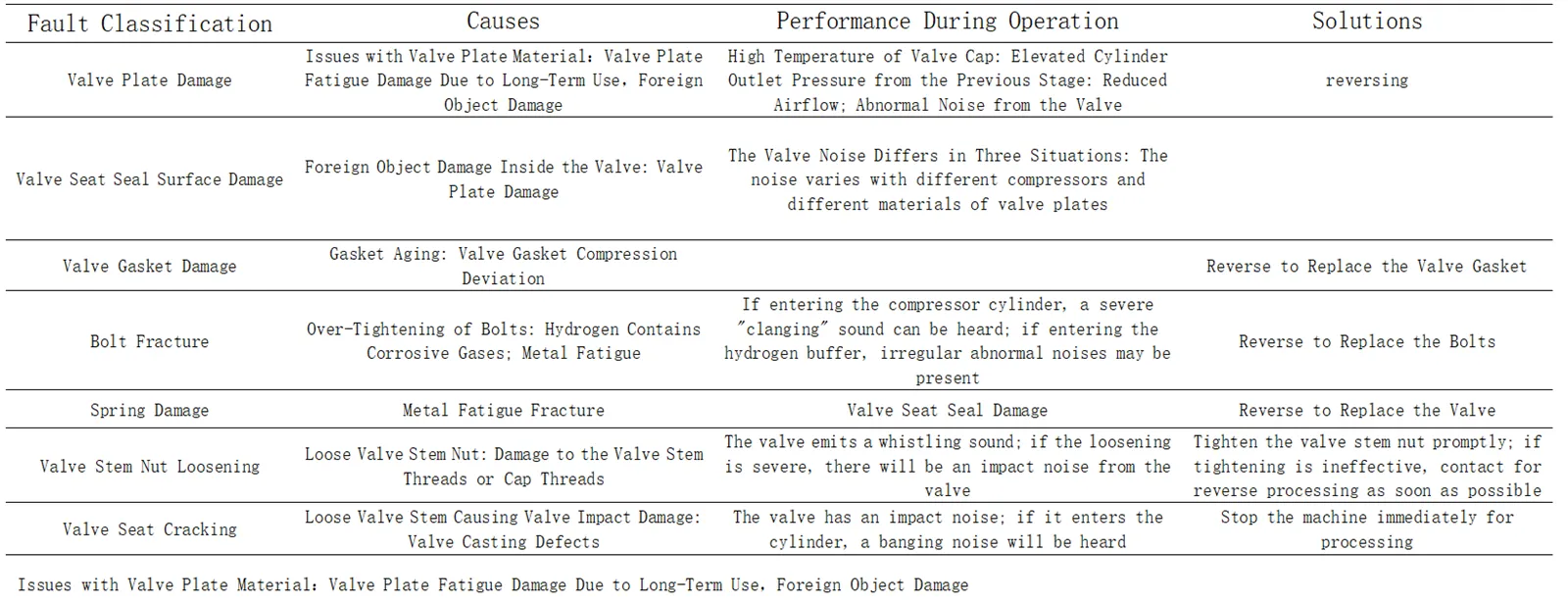
Table 4: Valve Plate Failure Analysis and Handling Methods
3.3 Cylinder Block
The smoothness and lubrication of the cylinder wall are crucial. As the piston reciprocates rapidly within the cylinder, if the hydrogen contains dust or particulate matter, the cylinder wall can become scratched or grooved, potentially leading to cylinder failure. If scratches or grooves are minor, they can be smoothed using a half-round sharpening stone. For more severe scratches or grooves, where the length of the groove exceeds 1/4 of the cylinder circumference and the groove width is greater than 3 mm and depth greater than 0.4 mm, boring the cylinder is required. Boring is a common treatment for severe wear, increasing the cylinder diameter slightly, but not exceeding 2% of the original design diameter, with wall thickness reduction not exceeding 1/12 of the original thickness. After boring, select pistons and piston rings that match the new cylinder diameter to ensure proper clearance.
3.4 Crosshead and Connecting Rod
The crosshead is typically forged from high-quality carbon or alloy steel, providing high strength and rigidity. It connects the lower end of the piston rod to the small end bearing of the connecting rod, transmitting the force from the piston to the connecting rod and crankshaft. The connecting rod converts the piston's reciprocating motion into the crankshaft's rotational motion. The crosshead, crosshead pin, slide plate, and guide rail are collectively known as the crosshead assembly and are prone to cracking due to high pressure.
Replacing the Crosshead:
If the intermediate seat has been removed from the body, the crosshead can be replaced by removing it from the connection flange. If the intermediate seat is integral with the body, the crosshead replacement can be performed through measurement holes in the body.
During window replacement, move the crosshead to the center of the window (i.e., the center of the crosshead slide path), rotate it 90° along the axis to align the upper and lower slide paths with the two sides of the window, and then parallelly move it out of the window for repair and replacement.
When repairing, avoid damaging the slide path working surface, align with the guide port, and ensure the clearance meets the specified requirements.
Replacing the Large End Bearing of the Connecting Rod:
(1)Use the turning device to position the crankshaft journal at the top and secure it to prevent sliding and accidents.
(2)First, remove the connecting rod bolts from the lower part, use lifting ring screws to suspend the connecting rod cap, then remove the upper connecting rod bolts, and lift the cap and bearing together with the lifting ring screws.
(3)Slowly rotate the crankshaft with the turning device to separate the connecting rod from the crankshaft journal and remove the connecting rod for replacement.
(4)Replace the connecting rod big-end bearings in pairs.
(5)Perform non-destructive testing on connecting rod bolts.
(6)Currently, connecting rod big-end bearings are typically standard thin-walled bearings, requiring no scraping. The clearance of big-end bearings should strictly meet design requirements.
Replacing the Small End Bearing of the Connecting Rod:
(1)First, remove the positioning pin clamping nut and take out the positioning pin. Use a round rod to push the crosshead pin out from one end to separate the crosshead from the connecting rod. Then, remove the connecting rod from the engine cover and proceed with the small end bearing replacement, protecting the slide path.
(2)During replacement, press the old bearing out of the connecting rod small end and press in the new bearing.
3.5 Crankshaft
The taper and ovality of the main journal and crankshaft journal should be <0.10 mm; the main shaft levelness should be <0.05 mm/M (higher in the motor direction). Each inspection should include non-destructive testing of the crankshaft journals.
Replacing the Main Bearing:
(1)Remove the side cover of the machine body and the end side covers, and separate the crankshaft and motor connections. Then, loosen the lubricating oil pipe and the main bearing cover to remove the main bearing lower shell.
(2)Place a jack under the crankshaft at appropriate positions (keeping it balanced), raise the crankshaft approximately 0.1–0.2 mm, and use a round rod or other suitable tools to remove the main bearing lower shell from the bearing seat. Similarly, insert the new lower shell into the bearing seat.
(3)Install the new main bearing upper shell and cover into the bearing seat and secure the bearing bolts as required.
(4)Main bearings made in pairs must be replaced in pairs.
(5)Adjust the clearance between the large end bearing and the crankshaft journal using shims for thick-walled bearings. For thin-walled bearings, scrape if the clearance is too small; replace if it is excessively large.
(6)Measure the radial clearance using lead pressure methods and the axial clearance using feeler gauges or subtracting the diameters of the bearing hole and shaft.
(7)The radial clearance should be 0.8‰–1.2‰ of the journal diameter.
(8)For design-specific requirements, the main bearing clearance should strictly follow the compressor's design values.
4. Conclusion
In chemical production processes using hydrogen as the raw material, the hydrogen compressor is a core piece of equipment for chemical reactions. Therefore, a well-planned maintenance schedule should be established, including regular checks on standby units and maintenance work following manufacturer requirements after switching to a backup compressor. Additionally, the lubricating oil system should be regularly checked, and the primary and secondary filters cleaned. During inspections, use a stethoscope to check for abnormal sounds in various compressor segments to determine if the cast iron cylinder block, crankshaft, connecting rods, etc., are functioning normally. This paper analyzes and summarizes the working principles, classifications, and common failures of hydrogen compressors, providing operational guidance for the chemical industry, improving the operation, management, and maintenance levels of hydrogen compressors, ensuring stable operation, reducing downtime losses, and maximizing economic benefits for enterprises.
Disclaimer:
1. Some graphic and textual information is sourced from the internet and WeChat official accounts, with the intention of sharing more information.
2. The information provided is for learning and reference purposes only and does not imply endorsement of the views expressed. No guarantees are made regarding the accuracy, reliability, or completeness of the information.
3. If there are concerns related to content, copyright, or other issues, please contact us within 30 days for removal.